BinaraPoya

Binara Full Moon Poya Day

The Establishment of Bhikkhuni Sangha

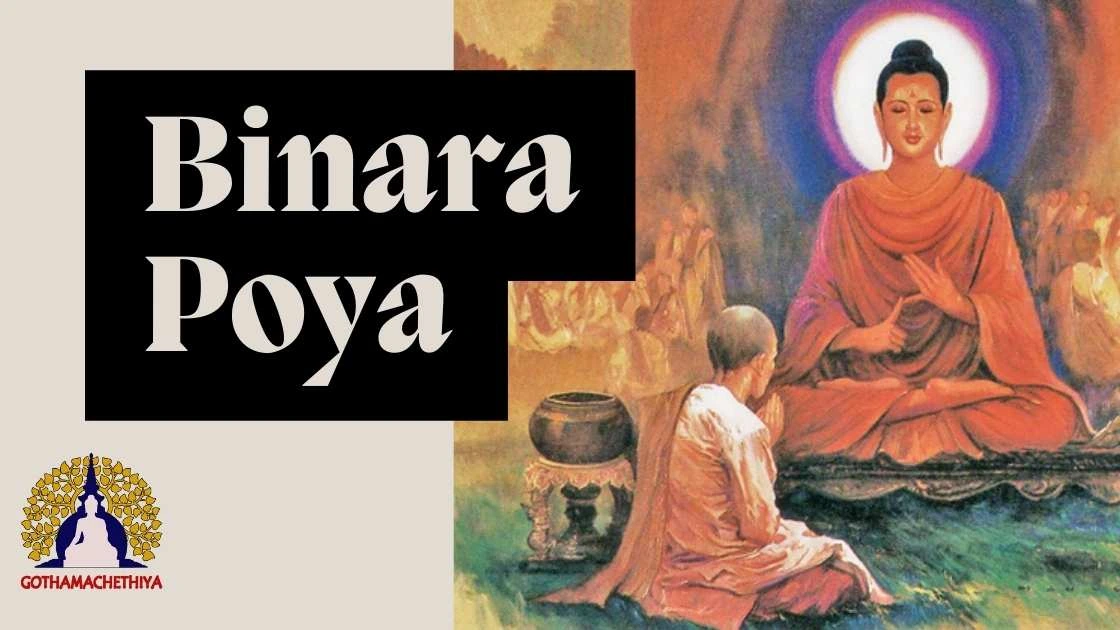
Binara Full Moon Poya holds historical significance in Sri Lanka as Buddhists commemorate the establishment of the Bhikkhuni Sasanaya, the Order of the Female Buddhist Monastic. The inaugural ordination witnessed the veneration of Mahapajapathi Gothami, the stepmother of Buddha, marking a pivotal moment in the evolution of the Bhikkhuni Sangha.

Mahapajapathi Gothami

Delve into the life of Mahapajapathi Gothami, the younger sister of Queen Maha Maya and stepmother to Buddha. After the Queen’s passing, Mahapajapathi Gothami assumed the role of raising the young prince and later married Buddha’s father, King Suddodhana. Her ordination during Binara Poya stands as a testament to her pivotal role in shaping Buddha’s early life.

Binara Poya Celebrations

Binara Poya coincides with the continuation of the Vas season, where bhikkuni engage in focused meditation within their monasteries. The month also features a vibrant Perahara at Mahiyangana, highlighting the indigenous Veddah people’s participation. The Mahiyangana Stupa, built to commemorate Buddha’s inaugural visit to Sri Lanka, serves as a sacred backdrop to these cultural celebrations.

NikiniPoya

Nikini Full Moon Poya Day

Nikini Poya, the second Poya in the Vas season falling in August, holds a sacred place in the Buddhist calendar. As part of the Vas retreat initiated with Esala Poya, Nikini Poya extends over four months, during which Buddhist monks abstain from outdoor activities, delving into intense spiritual pursuits. This period fosters a profound connection between monks and lay devotees, offering a unique opportunity for discussions and guidance.

Vas Retreat and Monastic Discipline

The Vas retreat, mandated by the Buddha centuries ago, is a period of deep introspection and meditation for monks. This spiritual seclusion not only enhances the monks’ focus on their path to enlightenment but also opens avenues for meaningful interactions with the lay community. Lay devotees, recognizing the monks’ accessibility during Vas, actively contribute to their welfare and needs.

First Buddhist Council

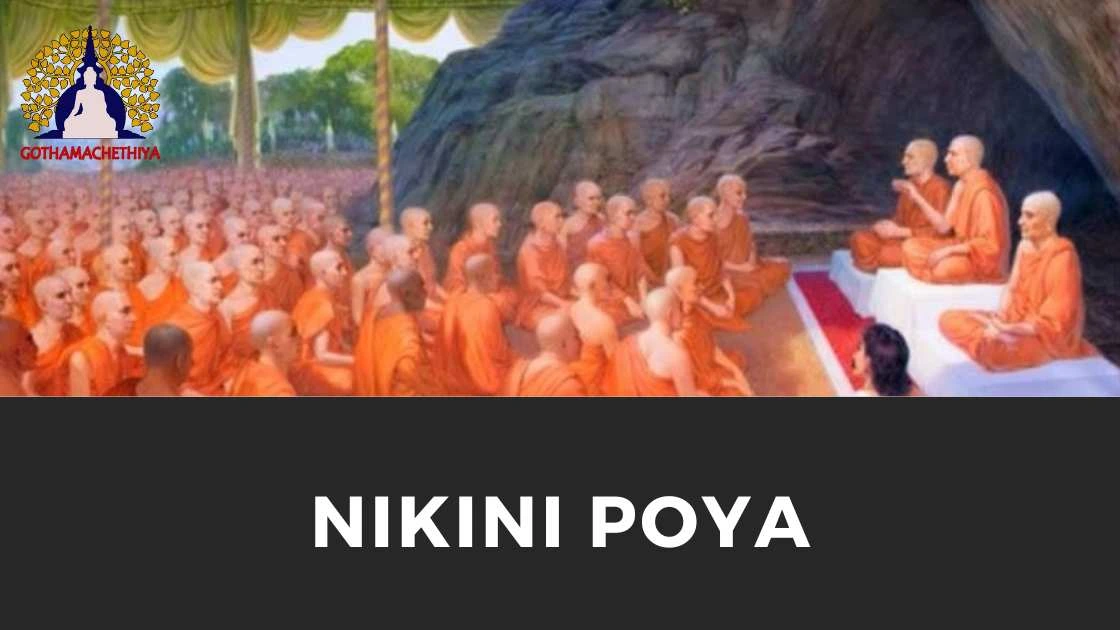
The historical significance of Nikini Poya revolves around the first Dhamma Sangayana held in the Sattapanni Cave in Rajagahanuwara. Three months after the Parinirvana of the Buddha, senior disciples felt a need to establish and reinforce monastic principles. Presided over by Mahakassapa Thero, this convocation aimed to address unseemly behavior by a monk within the Maha Sangha. Notably, Ananda Thero, the Buddha’s chief disciple, attained Arahantship during this event, marking a pivotal moment in Buddhist history.

Nikini Poya in Sri Lanka

In Sri Lanka, Nikini Poya unfolds as a day of religious fervor and observances. Devotees visit temples with offerings of flowers, engaging in religious rituals to commemorate this auspicious day. Adding to its cultural richness, Nikini Poya holds a special place in the conclusion of the annual Kandy Esala Perahera. The grandeur of the Perahera, culminating in a Day Perahera on Nikini Full Moon Poya, captivates spectators with its vibrant cultural display and spiritual significance.

VesakPoya

Vesak Full Moon Poya day

Vesak, also known as Buddha Purnima, is a profound celebration observed by Buddhists worldwide. It encapsulates the triple commemoration of the birth, enlightenment, and passing away of Siddhartha Gautama, who later became known as Lord Buddha.

Birth of Prince Siddhartha

The divine inquiry about the right time, area, continent, caste, and mother culminated in Queen Mahamaya giving birth to Siddhartha under the arbor of Sat trees in Lumbini, Nepal. This auspicious event, marking the beginning of the Buddha’s earthly journey, unfolded on a Vesak Poya day.

Attainment as Lord Buddha

After extensive training under various teachers, Gautama Buddha, disillusioned by their teachings, embarked on a solitary path of meditation. The culmination of his efforts occurred on a Vesak Poya day when he reached enlightenment and became the Buddha, the Awakened One.

Lord Buddha’s Parinibbana

The great teacher, at the age of 80, foretold his imminent passing away or Parinibbana, choosing Vesak Poya day for this momentous event. The culmination of his earthly journey occurred in the Sal grove of the Malla royal family, leaving an indelible mark on Vesak.

Global Religious and Cultural Activities

While Vesak has deep roots in Sri Lanka, its significance extends globally, finding resonance in many Asian countries, including India, Japan, Singapore, and Taiwan. This universal celebration reflects the widespread impact of Buddha’s teachings and the timeless relevance of his message.

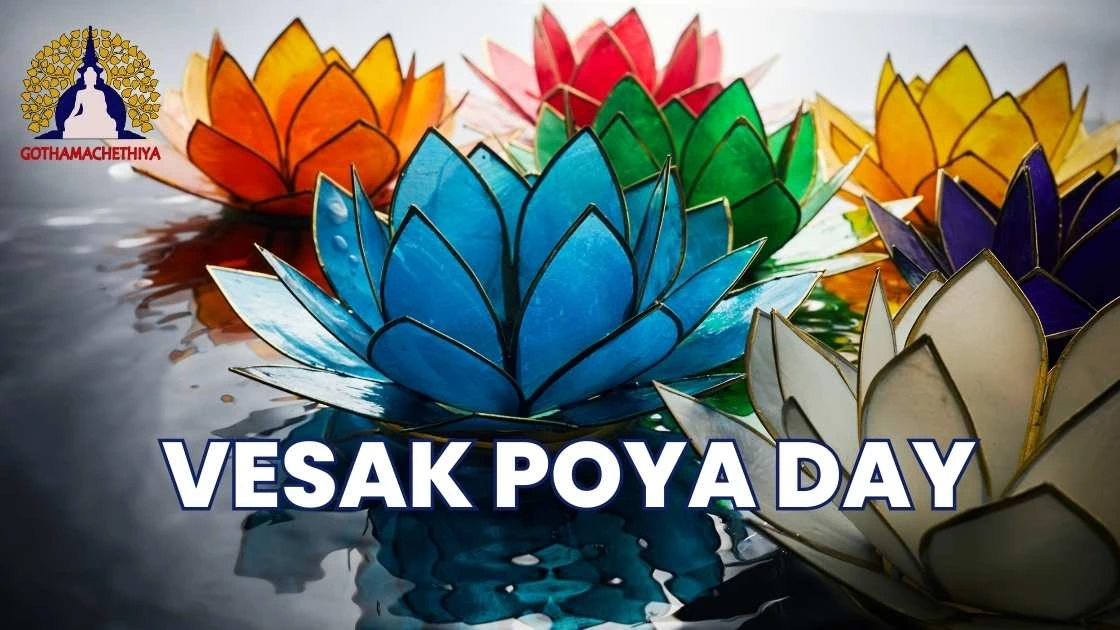
During the Vesak period, various religious activities take center stage in Sri Lanka. Sil campaigns, Bodhi Poojas, Dansalas (food-sharing stalls), Vesak devotional songs (Bakthi Gee), pandols (thorans), and lantern displays contribute to the vibrant atmosphere, fostering a sense of community and spirituality.

The heart of Vesak lies in the devout practices carried out by Buddhists across the country. Temples become focal points for devotees and pilgrims, who engage in traditional ceremonies involving worship, flower offerings, lighting lamps, and burning incense. These rituals not only satisfy religious needs but also create an emotionally charged and sacred environment.

Integral to Vesak is the practice of ‘Dana’ or alms-giving, symbolizing the spirit of generosity and compassion. During the Vesak Festival week, a notable shift occurs as the sale of alcohol and meat is prohibited, aligning with the Buddhist principles of non-violence and mindfulness. Devotees reaffirm their commitment to Buddha’s teachings by engaging in acts of kindness and charity.

PosonPoya

Poson Full Moon Poya Day

Poson Poya Day, celebrated on the full moon day of June, marks a pivotal moment in Sri Lanka’s history—the arrival of Buddhism in the 3rd century BC. The festival commemorates the conversion of King Devanampiyatissa by Arahat Mahinda, the son of Emperor Asoka of India. Over 2,000 years ago, this event unfolded, shaping the cultural and religious landscape of the island.

Mihintale and Anuradhapura

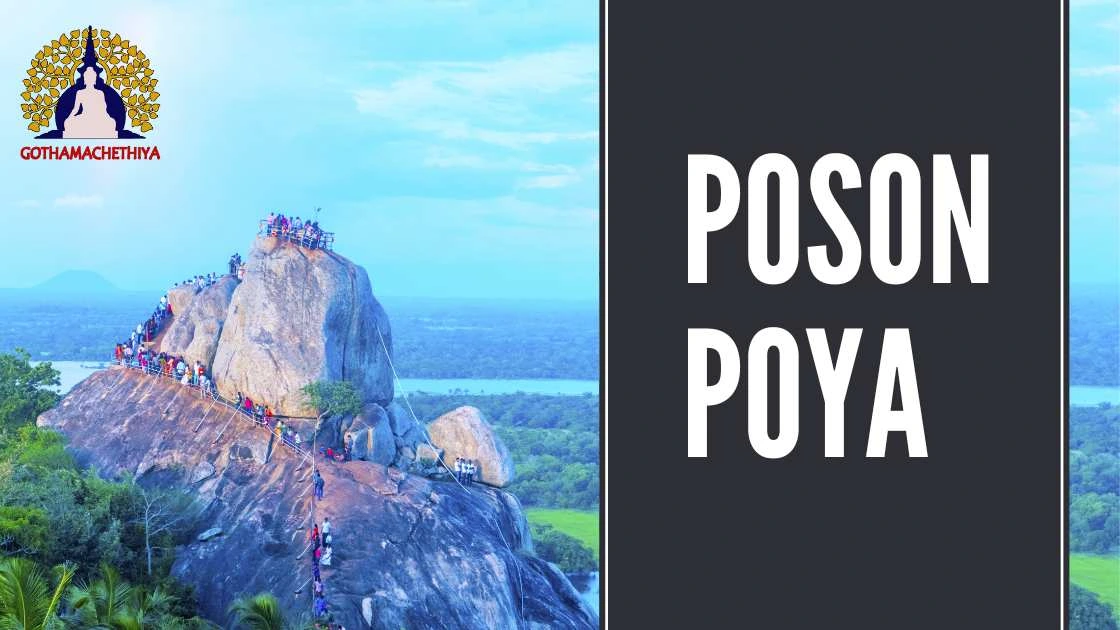
While Poson is observed across Sri Lanka, the primary centers of celebration are Mihintale and Anuradhapura. Mihintale, the ancient monastic complex, witnessed the first sermon delivered by Mahinda to the ruling king. Anuradhapura, the ancient capital, draws large crowds of pilgrims converging to partake in mass religious observances, illuminations, and pageants.

Cultural Impact

Often referred to as the cradle of Buddhism in Sri Lanka, Mihintale played a pivotal role in the island’s cultural evolution. With the establishment of Bhikku Sasanaya, various elements of a civilized society emerged, including the arts, architecture, river civilization, religious rituals, literature, and royal patronage.

Religious and Cultural Activities

Poson unleashes a wave of religious activities and cultural festivities throughout Sri Lanka. Sil campaigns, Bodhi Poojas, Dansalas (food-sharing stalls), Poson devotional songs, pandols (thorans), and lantern displays adorn the streets and public places. Temples overflow with devotees clad in pure white, engaging in silent contemplation.

EsalaPoya

Esala Full Moon Poya Day

Conception of Prince Siddhartha

The significance of Esala Full Moon Poya resonates deeply in the annals of Buddhism. On this auspicious day, over 2,000 years ago, Queen Mahamaya, in one of her past lives, had a dream foretelling the conception of a great being. This dream mirrored a thousand years later, led to the conception of Prince Siddhartha on the Esala Full Moon Poya Day. The joyous news of Queen Mahamaya’s pregnancy was a momentous occasion for the king, the queen, and all in the palace, as the couple had been childless for two decades.

The Great Renunciation

The story unfolds further as Prince Siddhartha, leading a luxurious life, realized the impermanence and suffering inherent in existence. Determined to find a solution to universal suffering, at the age of 29, the Prince embarked on the Great Renunciation, leaving behind the comforts of the palace to seek enlightenment. This profound event, a pivotal chapter in Buddhist history, occurred on an Esala Full Moon Poya Day, marking the beginning of the Buddha’s transformative journey.

First Discourse

Seven weeks after attaining Buddhahood, on another Esala Full Moon Poya Day, the Buddha delivered his first discourse, the Dhammacakkappavattana Sutta, to the five Ascetics at Isipathanaya in Benares. This sermon encapsulated the core teachings of Buddhism—the Four Noble Truths and the Noble Eightfold Path. The eldest Kondangna Thera attained the first stage of sainthood, marking the inception of the Buddha’s monastic community.

Cultural and Ritual Significance in Sri Lanka

Esala Full Moon Poya holds multifaceted significance in Sri Lanka. The first local ordination, the convocation of the first Buddhist Council, and significant events in the life of the Buddha, such as his visit to Thusitha Heaven and the laying of the foundation for the Mahastupa or Ruwanvelisaya, contribute to the rich tapestry of events associated with this Poya Day. Additionally, the annual rains retreat of monks, ‘Vas,’ commences on the day following Esala Full Moon Poya.

DependentOrigination

The Dependent Origination

The roots of Theravada Buddhism delve deep into the Pali Canon, unveiling the profound teachings of Dependent Origination. This foundational concept explicates the intricate connections governing the cycle of birth, suffering, and liberation.

Central to Dependent Origination are the twelve links that intricately weave the fabric of existence. These links, ranging from ignorance to aging and death, portray the voyage of birth and rebirth. The symbolic representation of the Voyage of Becoming vividly illustrates the perpetual journey of sentient beings sustained by these interconnected links.

“And what, bhikkhus, is dependent origination? With ignorance as condition, volitional formations come to be; with volitional formations as condition, consciousness; with consciousness as condition, name-and-form; with name-and-form as condition, the six sense bases; with the six sense bases as condition, contact; with contact as condition, feeling; with feeling as condition, craving; with craving as condition, clinging; with clinging as condition, existence; with existence as condition, birth; with birth as condition, aging-and-death, sorrow, lamentation, pain, displeasure, and despair come to be. Such is the origin of this whole mass of suffering. This, bhikkhus, is called dependent origination.
“But with the remainderless fading away and cessation of ignorance comes cessation of volitional formations; with the cessation of volitional formations, cessation of consciousness; with the cessation of consciousness, cessation of name-and-form; with the cessation of name-and-form, cessation of the six sense bases; with the cessation of the six sense bases, cessation of contact; with the cessation of contact, cessation of feeling; with the cessation of feeling, cessation of craving; with the cessation of craving, cessation of clinging; with the cessation of clinging, cessation of existence; with the cessation of existence, cessation of birth; with the cessation of birth, aging-and-death, sorrow, lamentation, pain, displeasure, and despair cease. Such is the cessation of this whole mass of suffering.”

(Paṭiccasamuppādasutta- SN 12.1)

Nibbana as Liberation

The ultimate goal in Theravada Buddhism is liberation from the ceaseless voyage of birth and death. Nibbana, or Nirvana, represents the extinguishing of craving, ignorance, and the cessation of suffering. Overcoming ignorance becomes the pivotal point for breaking the cycle, leading to the attainment of Nibbana.

The Path to Liberation

Culminating in the Noble Eightfold Path, the journey to liberation involves understanding and practicing right understanding, right intention, right speech, right action, right livelihood, right effort, right mindfulness, and right concentration. This transformative path guides practitioners towards wisdom, ethical conduct, and the cultivation of compassion, providing a clear route to break free from the cycle of Dependent Origination.

Conclusion

In the intricate tapestry of Theravada Buddhism, Dependent Origination stands as a beacon of understanding, offering profound insights into the nature of existence and the path to liberation. As practitioners embark on this transformative journey, the interconnected links unravel, paving the way to Nibbana and the cessation of suffering.

NobleEightfoldPath

The Noble Eightfold Path

Theravada Buddhism, the ancient school of Buddhism, encapsulates the essence of the Noble Eightfold Path. This path serves as a comprehensive guide for followers on their journey towards enlightenment, offering a roadmap to navigate life’s complexities. Rooted in the teachings of Siddhartha Gautama, the historical Buddha, the Noble Eightfold Path outlines a transformative way of living, thinking, and being.

Understanding the Noble Eightfold Path

  1. Right Understanding (Samma Ditthi): At the foundation of the Noble Eightfold Path is Right Understanding. It involves grasping the Four Noble Truths – the reality of suffering, its origins, the possibility of cessation, and the path leading to cessation. This understanding sets the stage for a profound shift in perspective.
  2. Right Intention (Samma Sankappa): Following Right Understanding is Right Intention. This step emphasizes cultivating wholesome intentions and aligning one’s purpose with the pursuit of liberation. It involves renouncing harmful thoughts and fostering compassion and goodwill.
  3. Right Speech (Samma Vaca): The path then unfolds into Right Speech, emphasizing truthful, kind, and beneficial communication. Words hold immense power, shaping reality and relationships. Right Speech encourages mindfulness in verbal expressions, fostering harmony and understanding.
  4. Right Action (Samma Kammanta): Moving beyond speech, Right Action directs individuals towards ethical conduct. It involves abstaining from actions that cause harm, such as killing, stealing, and engaging in sexual misconduct. Right Action promotes a life founded on principles of non-violence and integrity.
  5. Right Livelihood (Samma Ajiva): Integrating ethical principles into one’s livelihood, Right Livelihood guides individuals to choose occupations that align with the path of righteousness. It discourages professions that involve harming living beings or engaging in deceptive practices.
  6. Right Effort (Samma Vayama): Right Effort propels practitioners towards the diligent cultivation of positive qualities and the eradication of negative tendencies. It involves nurturing mindfulness, concentration, and the development of wholesome states of mind.
  7. Right Mindfulness (Samma Sati): Central to the path is Right Mindfulness, urging individuals to be present and aware of the mind in every moment. Mindfulness extends beyond meditation, permeating daily activities. It involves observing thoughts, emotions, and actions without attachment or aversion based on the four foundations of Mindfulness.
  8. Right Concentration (Samma Samadhi): Culminating in Right Concentration, the path emphasizes the development of focused, tranquil states of mind. Through meditation, practitioners deepen their concentration, ultimately experiencing profound insights and awakening in the four Jhanas.

The Interconnectedness of the Noble Eightfold Path

Each aspect of the Noble Eightfold Path is interconnected, forming a holistic framework for spiritual development. The path is not linear but a simultaneous and harmonious progression. For instance, Right Mindfulness supports Right Concentration, while Right Understanding underpins the entire journey. This interdependence reflects the multifaceted nature of the path.

The Transformative Power of the Noble Eightfold Path

The Noble Eightfold Path serves as a transformative force, offering practitioners a means to break free from the cycle of suffering and rebirth. By aligning thoughts, intentions, and actions with the path, individuals gradually overcome ignorance and craving, paving the way for enlightenment.

Challenges on the Path

Embarking on the Noble Eightfold Path is not without challenges. It requires commitment, self-reflection, and resilience. The path acknowledges the inherent difficulties in breaking free from conditioned habits and attachments, emphasizing the importance of perseverance and patience.

The Role of Meditation in the Noble Eightfold Path

Meditation plays a pivotal role in the Noble Eightfold Path, particularly in developing Right Mindfulness and Right Concentration. Meditation serves as a practical tool for cultivating awareness, concentration, and insight. Various meditation techniques guide practitioners on their internal exploration, facilitating a deep understanding of the nature of the mind.

Practical Application in Daily Life

The teachings of the Noble Eightfold Path extend beyond the meditation cushion into daily life. Practitioners are encouraged to integrate the path’s principles into their interactions, relationships, and decision-making. The path becomes a living philosophy, shaping a life of wisdom, ethical conduct, and compassion.

Walking the Noble Eightfold Path

In conclusion, the Noble Eightfold Path stands as a timeless guide in Theravada Buddhism, offering a comprehensive framework for spiritual development. As practitioners navigate the intricacies of life, this path serves as a steady compass, illuminating the way towards enlightenment. By embodying the principles of Right Understanding, Right Intention, and the subsequent components, individuals can transform their lives and progress towards the ultimate goal – the cessation of suffering.

FourNobleTruths

The Four Noble Truths in Buddhism

The Four Noble Truths, considered the cornerstone of Buddhist philosophy, serve as a comprehensive framework for understanding the nature of existence and the path to liberation from suffering. Enunciated by Siddhartha Gautama, the historical Buddha, these truths encapsulate the essence of his enlightenment and continue to guide millions of practitioners on their spiritual journey.

Dukkha – The Recognition of Suffering

The first truth, Dukkha, bravely acknowledges the pervasive nature of suffering in human life. It goes beyond overt pain, recognizing the subtle dissatisfaction that permeates conditioned existence. Understanding this truth becomes the initial and crucial step toward transcending suffering.

Dukkha encompasses a spectrum of human experiences, from overt pain to subtle dissatisfaction. It challenges individuals to confront the inherent difficulties of existence and recognize that life, by its very nature, involves some form of suffering. This acknowledgment becomes the foundation for spiritual growth.

Samudaya – The Origin of Suffering

Delving into the roots of suffering, the second truth, Samudaya, identifies craving and attachment as the fundamental causes. These desires bind individuals to the cycle of birth, death, and rebirth, known as Samsara. Whether the craving is for sensual pleasure, existence, or non-existence, it perpetuates the cycle of suffering.

Samudaya takes a closer look at the origin of suffering, identifying craving and attachment as the culprits. The insatiable desires for pleasure, existence, or avoidance of existence perpetuate the cycle of Samsara. By understanding these roots, individuals gain insight into the mechanisms that bind them to suffering.

Nirodha – The Cessation of Suffering

Offering a beacon of hope, the third truth, Nirodha, asserts that the cessation of suffering is attainable. By extinguishing craving and achieving Nirvana, individuals can break free from the relentless cycle of rebirth and experience ultimate liberation. This truth underscores the transformative potential within each person.

Nirodha introduces the hopeful notion that the cessation of suffering is within reach. By extinguishing craving, individuals can achieve Nirvana, breaking free from the cycle of birth and death. This truth instills a sense of agency, encouraging practitioners to actively engage in the transformative process leading to liberation.

Magga – The Path to Liberation

The fourth truth, Magga, outlines the Eightfold Path as the means to end suffering. This path provides a comprehensive guide for ethical and mental development. Comprising right understanding, intention, speech, action, livelihood, effort, mindfulness, and concentration, the Eightfold Path serves as a roadmap for individuals seeking to liberate themselves from the shackles of suffering.

The Eightfold Path outlined in Magga serves as a comprehensive guide for ethical and mental development. It provides a roadmap for individuals seeking to liberate themselves from suffering. Each aspect of the path, from right understanding to right concentration, contributes to a holistic approach to spiritual growth and awakening.

Relevance of the Four Noble Truths Today

In the contemporary world, where individuals grapple with various forms of suffering, the Four Noble Truths continue to offer profound insights and practical guidance. The universal nature of these truths transcends cultural and temporal boundaries, making them relevant for seekers of wisdom across diverse backgrounds.

The Four Noble Truths, with their deep insights into the nature of suffering and the path to liberation, stand as a testament to the profound wisdom of Buddhism. Through an exploration of Dukkha, Samudaya, Nirodha, and Magga, individuals embark on a transformative journey toward understanding, enlightenment, and the ultimate cessation of suffering. As timeless teachings, the Four Noble Truths remain a guiding light for those navigating the complexities of human existence, offering a path to profound spiritual realization and liberation.