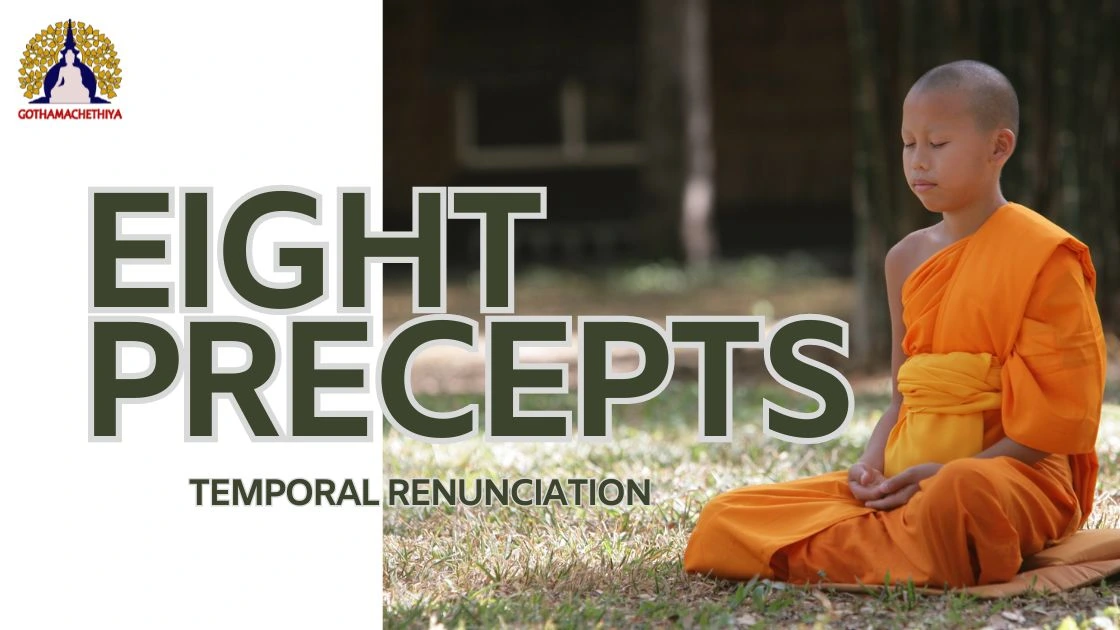
EightPrecepts

Observing the Eight Precepts

The Buddha encouraged lay followers to uphold the Five Precepts, which involve abstaining from killing, stealing, sexual misconduct, lying, and consuming intoxicants, for the entirety of their lives. Additionally, he suggested observing the Uposatha Precepts, also known as the Eight Precepts, as frequently as possible. Traditionally practiced on full-moon days, these precepts can be taken at any time.

Temporal Renunciation

Adhering to these additional precepts provides an opportunity to engage in renunciation akin to the daily practices of monks and nuns. The precept on abstaining from sexual misconduct is heightened to avoid any form of sexual activity. The last three precepts involve relinquishing various pleasures, such as limiting food intake by abstaining from solid food in the afternoon, forgoing entertainment and body adornment, and using only simple furniture.

Temporarily giving up these comforts aids in recognizing and reducing attachments. In the absence of these elements, individuals have the chance to focus on meditation and experience a happiness detached from material possessions.

Enlightened beings who have reached the highest goal in the Buddha’s teachings completely renounce these aspects of worldly pleasure. Hence, when we observe these training rules, we emulate these spiritual exemplars. Understanding the benefits of such dedicated practice brings joy to our minds, simply reflecting on the times we have devoted ourselves to this higher commitment.

Taking the Eight Precepts

Typically, our practice commences with expressing reverence to the Buddha and seeking refuge in the Triple Gem.

Namo tassa bhagavato arahato sammā-sam-buddhassa

Buddhaṁ saranaṁ gacchāmi.
Dhammaṁ saranaṁ gacchāmi.
Saį¹…ghaṁ saranaṁ gacchāmi.
Dutiyam’pi Buddhaṁ saranaṁ gacchāmi.
Dutiyam’pi Dhammaṁ saranaṁ gacchāmi.
Dutiyam’pi Saį¹…ghaṁ saranaṁ gacchāmi.
Tatiyam’pi Buddhaṁ saranaṁ gacchāmi.
Tatiyam’pi Dhammaṁ saranaṁ gacchāmi.
Tatiyam’pi Saį¹…ghaṁ saranaṁ gacchāmi.

Then recite:

1. I observe the precept of abstaining from killing beings.
2. I observe the precept of abstaining from stealing.
3. I observe the precept of abstaining from incelibacy.
4. I observe the precept of abstaining from telling lies.
5. I observe the precept of abstaining from taking intoxicating drinks and drugs.
6. I observe the precept of abstaining from eating at improper times.
7. I observe the precept of abstaining from dancing singing music shows wearing garlands and beautifying with cosmetics.
8. I observe the precept of abstaining from using luxurious and comfortable seats and beds.

Imitating great arahants, I follow these precepts for happiness in this life, for rebirth in heaven, and to realize the Four Noble Truths in this Gautama Buddha’s Dispensation.


MeditationInsight

An Insight into Meditation

Meditation, an age-old practice, holds profound significance across various communities worldwide, representing a timeless pursuit of spiritual development. Throughout history, ascetics sought seclusion to delve into meditation, striving to uncover a path toward enlightenment. These devoted individuals, mastering meditation with unwavering effort, attained unique spiritual stages of the mind.

The Triple Gem

Among the multitude of ascetics, one remarkable figure surpassed them all, purifying the mind and realizing the ultimate truth to alleviate suffering – the Supremely Enlightened One, revered as the Buddha. His teachings emphasized ethics as the foundation for cultivating virtuous qualities in the mind, a sentiment echoed in the five basic training rules known as the five precepts.

Central to the Buddha’s teachings was the meditation technique known as “Anapanasati” or breathing meditation. With profound wisdom, the Buddha discerned that beings were ensnared by greed, hatred, and delusion, perpetuating the cycle of birth, aging, and death known as “Samsara.” He discovered the noble path to escape this suffering and attained the ultimate happiness he termed “Nibbana.” Compassionately sharing his wisdom, the Buddha attracted wise followers among gods and humans.

The teachings of the Buddha, encapsulated as “The Dhamma,” prompted wise individuals to renounce worldly life and join the Sangha – the monastic community. The Sangha comprised Arahants, enlightened beings who extinguished the suffering of rebirth, and path practitioners on their journey toward enlightenment. Devout Theravada Buddhists take refuge in the Triple Gem – the Buddha, Dhamma, and Sangha.

Two Aspects of Meditation

The meditation taught by the Buddha encompasses two main aspects: Samatha (Calm) and Vipassana (Insight). Samatha meditation tranquilizes the mind with concentration and mindfulness, while Vipassana meditation penetrates the reality of life with profound wisdom. The ultimate goal is to end suffering by relinquishing desire for all aspects of mind and matter.

Nurturing Wholesome Qualities

Meditation, often perceived as a technique for improving concentration, holds a more profound purpose in the Dhamma. The emphasis lies in nurturing good, humble, and wholesome human qualities, transcending the mere pursuit of concentration. The Buddha’s way of meditation shapes minds that harbor wholesome thoughts and actions, embodying kindness, self-confidence, and freedom from jealousy, anger, and revenge.

Abandoning Harmful Actions

In the Dhamma, the Buddha compassionately exhorted the abandonment of harmful actions – killing, stealing, sexual misconduct, lying, divisive speech, and harsh words. A virtuous life, anchored by the five basic precepts, lays the foundation for learning and practicing meditation. Practitioners, starting with loving-kindness meditation, gradually cultivate kind thoughts towards all beings.

The Gradual Path

It is crucial to comprehend that meditation does not yield instant results; rather, it demands continuous effort and determination. Analogous to a red sandalwood tree maturing over time, developing good qualities in human life requires patience. The Buddha’s timeless verse underscores the gradual purification of the mind, akin to a goldsmith cleansing gold.

May all beings embark on this transformative journey, cleansing their minds of impurities and gradually cultivating the wisdom and compassion espoused by the Buddha.

FivePreceptsBanner

The Five Precepts for a Mindful Life

The teachings of the Buddha emphasize the significance of ethics as the cornerstone for cultivating positive qualities in the mind. This article explores the Buddha’s guidance on ethical conduct through the Five Precepts, emphasizing their role in eliminating worry, fostering meditation, and contributing to the well-being of oneself and others.

The Five Basic Ethical Rules

The Buddha advocated five fundamental training rules for lay disciples, collectively known as the Five Precepts. These precepts, described as “five great gifts,” serve as a foundation for a mindful and ethical life:

  • Abstaining from killing living beings.
  • Abstaining from stealing.
  • Abstaining from sexual misconduct.
  • Abstaining from telling lies.
  • Abstaining from using intoxicating drinks and drugs.

Buddhists are encouraged to recite these precepts daily, and they are often offered at the beginning of various activities or when visiting a monastery. The commitment to these precepts brings clarity of mind and aligns with the Buddha’s teachings on ethical living.

Breaking and Renewing Precepts

Breaking a precept is considered a part of the human experience. The Buddha emphasized the power of intention, asserting that even the determination to follow the precepts in the future contributes to mental development. Acknowledging a breach and recommitting to the precepts strengthens one’s resolve and commitment to ethical living.

Doubts about precepts can be clarified by seeking guidance from knowledgeable friends, ensuring confidence in adhering to ethical guidelines. The challenges of maintaining precepts are outweighed by the benefits, such as a tranquil mind during meditation and a sense of gratitude for avoiding negative consequences.

Addressing common questions about the precepts, it should be clarified that accidental actions do not break precepts, and breaking a precept should be met with reflection and a renewed commitment. Regretting past transgressions is deemed unproductive, with the focus shifting to present adherence to the precepts.

Eight Precepts and Additional Observances

In addition to the Five Precepts, the Buddha recommended lay disciples to observe the Eight Precepts on Uposata days, which typically occur four times a lunar month. These additional guidelines further amplify the commitment to ethical conduct and mindfulness, offering practitioners an opportunity for heightened spiritual practice and self-discipline.

Observing the Eight Precepts on Uposata days provides lay practitioners with a structured framework for intensifying their commitment to ethical living, mindfulness, and spiritual progress. It serves as a voluntary expression of devotion, a temporary renunciation of worldly indulgences, and an opportunity for self-purification.

Conclusion

In conclusion, the Buddha’s teachings on ethics, encapsulated in the Five Precepts, offer a profound guide for cultivating a mindful and compassionate life. The adherence to these ethical principles brings immeasurable peace and comfort to oneself and others, reinforcing the Buddha’s characterization of them as “great gifts.” The Buddhist teaching encourages continuous reflection, commitment, and the pursuit of a mindful and ethical path for personal and collective well-being.